How to write AI search optimized blogs?
Imagine you have built the most beautiful library in the world. Every shelf is perfectly organized. Every book is accurate, up to date, and well written. There is just one problem: the building has no doors, no windows, and no address. Nobody can find it. We spend weeks writing, reviewing, and polishing our docs. We ship them. They live on a portal. And then we move on to the next release. But here is the thing we rarely stop to ask: when a developer has a question, does our documentation actually show up in the answer? You've spent years mastering SEO, perfecting your keyword strategy, and climbing the Google rankings. But suddenly, it feels like the rules are changing. ChatGPT, Google AI Overviews, and Gemini are reshaping how people find information, and your perfectly optimized content seems to be losing its edge. As one frustrated marketer put it, "it's a standard SEO but with a twist... this thing is so challenging." If you’re feeling this shift, you’re not alone. This guide demystifies Answer Engine Optimization (AEO) and Generative Engine Optimization (GEO), turning uncertainty into a competitive advantage.
The New Search : AEO & GEO
What is Answer Engine Optimization (AEO)?
AEO is the practice of creating and formatting content so AI-powered answer engines can easily discover, understand, and surface it as a direct response to user queries. The goal shifts from ranking in a list of links to being featured in snippets, knowledge panels, AI Overviews, or quoted by assistants. As one expert put it: “SEO gets you found. AEO gets you quoted.”
What is Generative Engine Optimization (GEO)?
GEO focuses on optimizing content for visibility inside responses generated by AI platforms like ChatGPT, Gemini, or Perplexity. It’s about influencing synthesized answers so your brand, data, or insights are cited or referenced, building authority and driving high-quality traffic.
AEO vs. GEO vs. SEO: A Simple Breakdown
Aspect | SEO | AEO | GEO |
Primary Goal | Rank webpages in link lists | Provide direct, extractable answers | Influence AI-synthesized responses & citations |
Success Metric | Rankings + click traffic | Featured in snippets, panels, voice answers | Brand mentions & citations in generated content |
Key Platforms | Traditional Google SERPs | Google AI Overviews, voice search, FAQs | ChatGPT, Perplexity, Gemini, Claude |
Print this table and keep it handy—SEO gets you found. AEO gets you quoted. GEO gets you cited.
The Ultimate AEO & GEO Checklist: 10 Actionable Strategies for Your Blog
1. Restructure for Scannability & Summarization
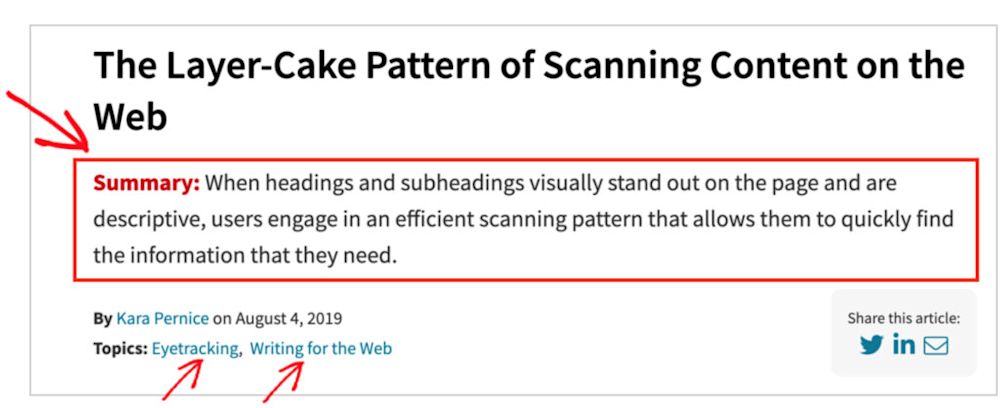
LLMs prefer content that’s easy to parse. AI outputs frequently use lists and structured formats.
Action: Use short paragraphs (2–3 sentences), bullet points, numbered lists, and a concise summary at the top.
2. Start with the Answer: Write Conversational Summaries
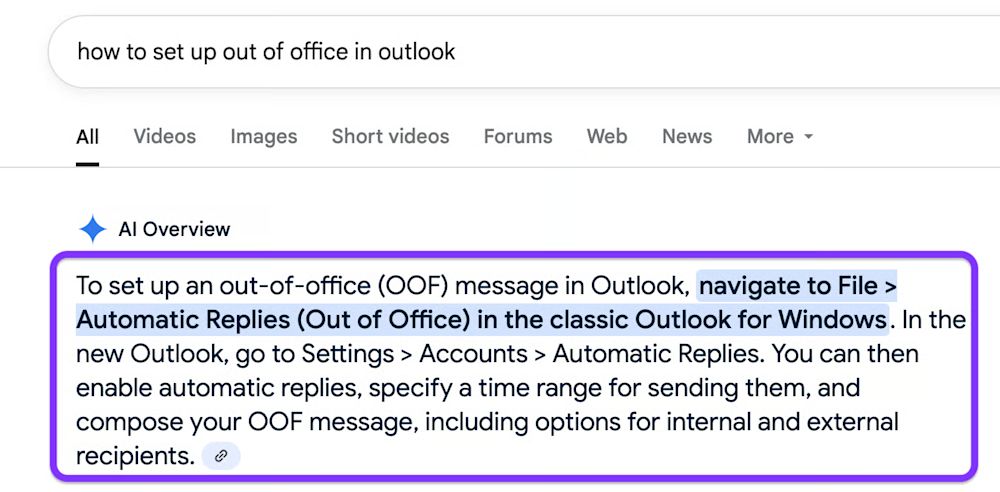
AI systems are built to retrieve and surface direct answers. If your content doesn't lead with a clear response, it's likely to be skipped over in favor of content that does.
Action: Open every article or section with a 2–3 sentence summary that directly answers the core question. Write it in plain, conversational language, as if you're explaining the answer to a colleague, not writing a formal essay.
Action: Treat your introduction like an "answer box." State what the content covers, what the reader will learn, and the key takeaway, all within the first 50–75 words. This gives AI models an immediately extractable, trustworthy response to surface.
Think of it as the journalistic "inverted pyramid" applied to AI: lead with the conclusion, then support it with detail. Content that buries the answer risks being ignored entirely by AI systems that prioritize parsability and directness.Action: Lead with a clear, direct answer to the main question. Use active voice and natural language.
3. Talk Like a Human: Optimize for Conversational Queries
People ask AI complete questions, not keyword fragments.
Action: Target long-tail, natural-language questions. Frame H2/H3 subheadings as questions to match real user intent.
4. Define Everything: Provide Clear Definitions
Action: Define key terms concisely near the start of each relevant section. This helps both humans and AI understand context.
5. Build Topical Authority with Content Clusters
Action: Create a comprehensive “pillar” page on a broad topic, supported by detailed “cluster” articles that link back to it. This signals deep expertise to AI systems.
6. Speak the AI's Language with Structured Data
Action: Implement schema markup (FAQ, HowTo, Article, etc.). Ensure it exactly matches the visible page content to avoid trust issues or penalties.
7. Prioritize Brand Mentions and Authority
Action: Earn unlinked brand mentions through original research, thought leadership, and media coverage. AI models treat these as strong authority signals.
8. Use Clear, Descriptive Subheadings
Action: Build a logical hierarchy with descriptive H2s and H3s. Well-structured pages perform significantly better in content evaluations.
9. Link with Purpose: Contextual Linking to Credible Sources
Action: Support claims with statistics and contextual links to authoritative primary sources. This builds verifiable credibility.
10. Test, Monitor, and Iterate
Action: Query AI tools with questions your content targets. Track mentions, citations, and AI referral traffic. Experiment with techniques like direct text fragment links.
From Ranking to Answering: The Future is Now
Success today means becoming the trusted source for direct answers not just ranking #1 in a list. Focus on clear, authoritative, well-structured content that genuinely solves problems.
Start here: Audit your highest-value or highest-traffic pages against this checklist. Implement changes gradually. Early adopters who embrace AEO and GEO will gain a lasting edge in the AI-driven search landscape.
Frequently Asked Questions
Why do AEO and GEO matter right now?
User behavior is shifting rapidly to AI platforms. AI-driven traffic often shows higher intent and better conversion rates, even as traditional search volumes evolve.
How do I get started?
Restructure existing content for scannability: add question-based headings, concise answers upfront, bullet points, and schema markup. Prioritize high-impact pages first.
What content formats work best?
How-to guides, definitional articles, listicles, FAQs, and well-structured explanatory content perform strongly because they’re easy for AI to parse and trust.
Is traditional SEO dead?
No. Core principles of quality, authority, and relevance matter more than ever. AEO and GEO are natural extensions of strong SEO.
How do I measure success?
Track brand mentions and citations in AI responses (emerging tools help), AI referral traffic, and conversion rates from those visits. Even modest AI traffic can deliver outsized results.