How AI Evaluates Your Healthcare Website: Technical SEO, Schema and Their Types
AI is already reading healthcare sites differently, and the evidence is hard to ignore
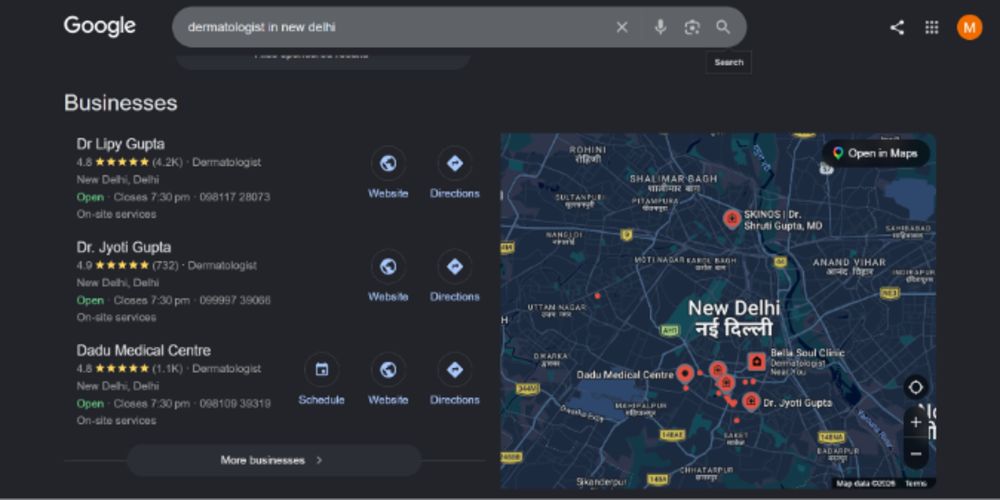
Your website may rank well. But can AI understand it? Imagine a patient asking Google, “Who is a good cardiologist for treating arrhythmia in Delhi?”
The answer may now come from AI, not from a list of blue links. To respond accurately, AI needs to understand your doctors, specialties, treatments, locations, and the evidence behind your claims.
That is changing healthcare SEO.
Google says AI Overviews work alongside Search systems and the Knowledge Graph, while structured data helps Google understand what your pages actually mean for healthcare websites, where accuracy and trust matter especially. Simply having good content is no longer enough.
This is where EasilyGeo comes in.
EasilyGeo helps organizations build stronger AI visibility by making their digital presence easier for search engines and AI systems to understand, connecting the right entities, services, locations, and supporting information across the web.
The goal is to make sure AI understands your brand correctly and includes it when people are looking for answers.
Schema markup is how you stop making AI guess what each healthcare page means
Schema markup is structured data that helps search engines and AI systems understand what every page on your website is actually about. Instead of asking AI to guess whether a page is about a doctor, a hospital, a treatment, or a medical condition, schema gives that information in a clear, machine-readable format.
Google is clear that structured data is not a ranking requirement or a guarantee of appearing in AI-generated results. But it does help machines understand entities and relationships on a page. The same clarity benefits answer engines that retrieve and cite web pages, including ChatGPT Search, Gemini, and Perplexity. The goal isn't to game AI; it's to make your content easier to interpret.
In this blog, we'll break schema down into practical healthcare examples instead of technical jargon. You'll learn:
What the most important healthcare schema types are and what each one tells AI.
Examples of how these schema types look on real healthcare pages, from doctor profiles to treatment pages and hospital websites.
How hospitals, clinics, diagnostic centres, and healthcare brands can use each schema to improve AI understanding and strengthen visibility across AI search experiences.
By the end, you'll understand not just what schema is, but how to use it to help AI connect your doctors, services, specialties, conditions, and locations into one clear healthcare knowledge graph.

Use the right schema for the right healthcare page
Different healthcare pages need different schema types. Think of schema as matching the page's primary purpose.
Schema type | Best used for |
Medical Organization / Hospital / Medical Clinic | This schema describes the healthcare organisation itself, the hospital, clinic, diagnostic centre or healthcare network. It tells AI who operates the facility, where it is located, how patients can contact it, and what medical specialties it offers. Hospital and MedicalClinic are more specific versions of MedicalOrganization.
Example A hospital homepage includes: Hospital name Address Phone number Emergency contact Departments Opening hours Website and social profiles
How healthcare brands can leverage it Every hospital or clinic homepage should use this schema. Multi-location healthcare brands should give each location its own MedicalClinic or Hospital entity instead of duplicating the same organisation across city pages. |
Physician (or Person) | Physician schema identifies an individual doctor as a distinct medical entity. It helps AI understand the doctor's specialty, qualifications, medical licence information, affiliations and consultation locations. Schema.org explicitly supports Physician as a healthcare type.
Example A cardiologist profile includes: Dr. Riya Sharma Cardiologist MBBS, MD, DM Cardiology 12 years of experience Apollo Hospital, Delhi Appointment availability Languages spoken
How healthcare brands can leverage it Every doctor profile should have its own Physician schema instead of treating doctors as plain text inside hospital pages. This helps AI connect doctors to specialties, hospitals and treatments. |
Healthcare Service | This schema explains the healthcare service being offered rather than the organisation or doctor. It is useful for consultation pages, diagnostic tests, procedures and treatment services.
Example A physiotherapy service page includes: Service name Description Available locations Cost information (if applicable) Provider organisation Booking method
How healthcare brands can leverage it Create separate schema for services like telemedicine, MRI scans, IVF consultation, dental implants, blood tests and vaccination services so AI understands them as services rather than blog content. |
FAQ Page | FAQ Page schema structures frequently asked questions so AI can clearly identify questions and answers published by the healthcare provider. Google only recommends using it for genuine FAQs visible on the page.
Example A vaccination page answers: Is the HPV vaccine safe? Who should take it? How many doses are required?
How healthcare brands can leverage it Add FAQ schema to treatment pages, diagnostic pages and appointment pages where patients repeatedly ask the same questions. |
BreadcrumbList | Breadcrumb schema explains where a page sits within your website hierarchy. Google also uses breadcrumb structured data to better understand site navigation.
Example Home - Cardiology - Arrhythmia Treatment - Dr. Riya Sharma
How healthcare brands can leverage it Implement breadcrumbs across the entire healthcare website so AI understands relationships between specialties, services, doctors and locations. |
Review / Aggregate Rating | This schema tells search engines when genuine reviews or ratings exist on a page. Reviews must reflect visible content and comply with Google's structured data guidelines.
Example A clinic page displays: 4.8 average rating 1,250 verified patient reviews
How healthcare brands can leverage it Use review schema only on pages where authentic patient reviews are published. Don't generate ratings that aren't visible on the page. |
Medical Condition | Medical Condition schema helps AI understand educational pages about diseases and health conditions. It can describe symptoms, causes, diagnosis, treatment options and related medical conditions.
Example A page about arrhythmia includes: Symptoms Causes Risk factors Diagnostic tests Treatment options Related specialists
How healthcare brands can leverage it Use this schema on condition libraries, symptom pages and disease explainers. Then internally link these pages to relevant doctors and treatment pages. |
For example, a cardiologist's profile should use Physician schema, while a page about heart failure symptoms should use Medical Condition schema. A hospital's homepage should describe the organisation with Hospital or MedicalOrganization schema, not the doctors or treatments it happens to mention.
Key Elements AI Uses to Evaluate Your Healthcare Website
Technical SEO: Technical SEO improves a website’s structure, speed, mobile responsiveness, security, and crawlability. It helps search engines and AI systems access, understand, and index healthcare content effectively.
Schema Markup: Schema markup is structured data added to a website’s code to explain its content to search engines and AI tools. It can clearly identify doctors, medical services, clinics, FAQs, reviews, and other healthcare information.
Content Quality: AI evaluates whether healthcare content is accurate, helpful, relevant, and easy to understand. Content supported by qualified professionals and reliable medical sources is more likely to be considered trustworthy.
Website Authority and Trust: AI looks for signals such as professional credentials, author biographies, medical reviews, secure browsing, and transparent contact information. These elements demonstrate expertise and help users trust the website.
Technical SEO: The first step toward AI trust and citations
Crawl access comes first. | Allow search engines to crawl important pages, submit an XML sitemap, and use canonical tags correctly. Fix broken links and redirect chains so AI systems can access the right content without confusion. |
Rendering problems break understanding. | If doctor details, FAQs or service tabs only appear after heavy client-side rendering, Google may not process them the way your team expects. Google’s JavaScript documentation explains that Search processes pages through crawling, rendering and indexing, so hidden or delayed content can become an interpretation problem rather than only a front-end problem. |
Architecture needs a clinical logic. | Use a simple structure, such as:
Homepage - Specialty - Service - Doctor - Location
This helps patients and AI systems understand how your healthcare content is connected. |
Performance still matters in India. | Core Web Vitals, compressed images, faster server responses and stable mobile rendering matter even more when a user is searching over patchy 4G in Nagpur or outside a metro. We keep seeing teams add new markup while the physician page still loads a heavy gallery before the doctor’s qualifications appear. |
Indexation hygiene protects trust. | Duplicate city pages, near-identical doctor profiles and parameter-heavy directory URLs dilute signals. Google’s crawl budget guidance is written for very large sites, but the same discipline applies to multi-location healthcare networks that generate lots of overlapping URLs. |
The goal is simple: make the important information available in clear, crawlable HTML so both search engines and AI systems can find, understand, and trust it.
If AI cannot find the right source on your site, it will quote someone else
If AI cannot find the right source on your site, it will quote someone else. The order of work is practical: make pages retrievable with clean crawlability, indexability, mobile performance and semantic HTML; add the right schema; connect brand, doctor, service and location into a consistent knowledge graph; reinforce those relationships with internal links, authoritative profiles and sameAs; then measure which pages AI engines actually cite.
In healthcare, the cost of getting this wrong is not only lost visibility. It can be the wrong doctor, the wrong location, or the wrong service details showing up in the answer a patient reads first.
See how AI search engines describe your healthcare brand before your competitors do
Run an AI visibility audit with us at EasilyGeo to see which healthcare pages AI engines cite, which competitors they prefer, and where your technical SEO, schema, or entity signals are breaking down. We help teams track AI citations, benchmark competitors, compare geographies and surface the sources shaping AI answers before those patterns harden.